

 Facebook
 X
X
 Pinterest
 Copy Link
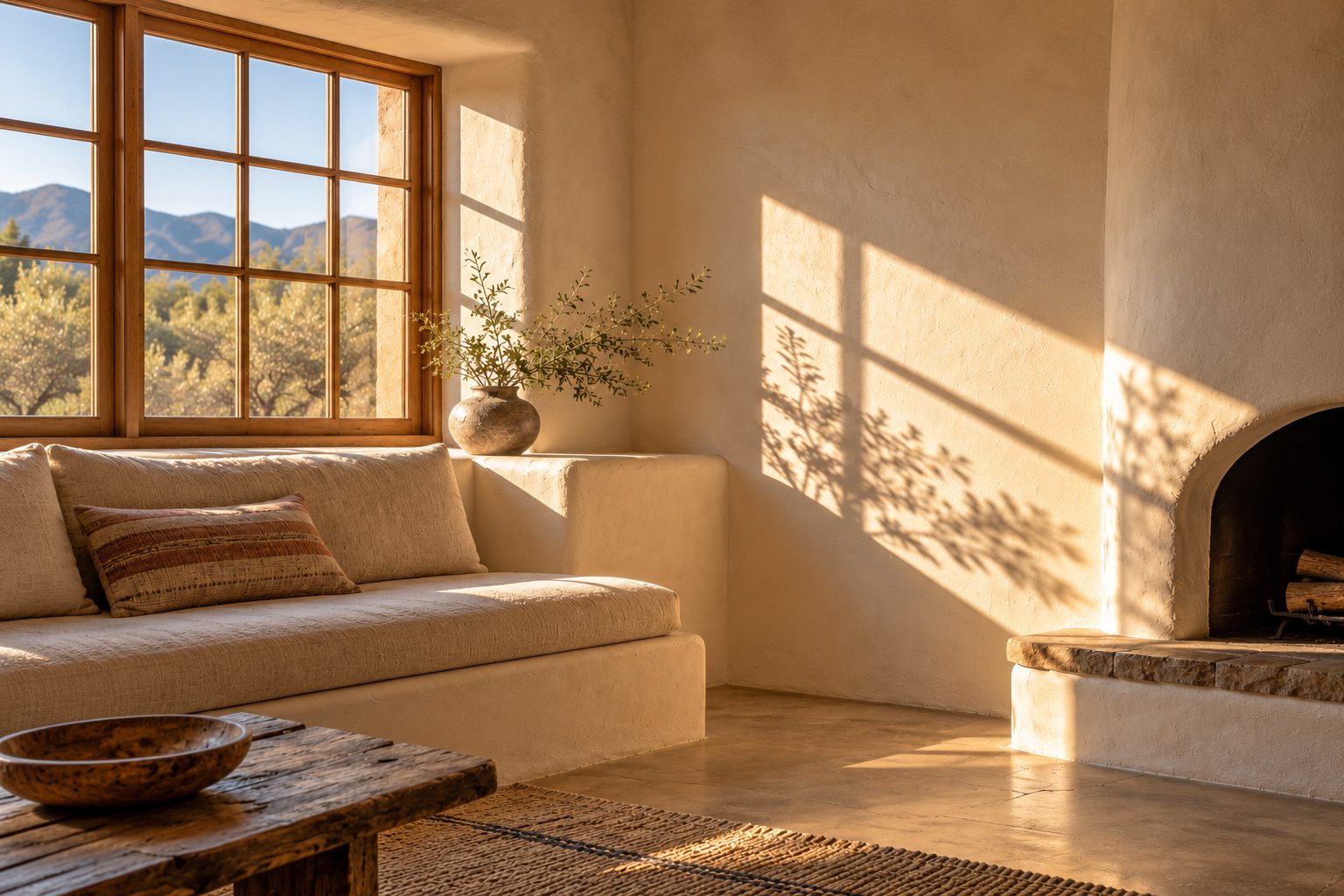
A room can feel very different at nine in the morning than it does at four in the afternoon. The windows haven’t changed. Neither have the finishes or the floor plan. But the light has—and with it, the experience of being in that space.
In Santa Fe, where views and outdoor living often draw our attention first, it’s worth looking just as carefully at how light moves through a home. Exposure, window placement, portals, and surrounding terrain all influence which rooms feel inviting at different times of day.
Autumn brings those questions into focus. As the sun’s path shifts lower and the days shorten, sunlight reaches some spaces differently than it did in summer. A shaded room may begin receiving direct sun. A favorite evening gathering spot may lose its light earlier.
For buyers, paying attention to these patterns can help answer a practical question: will this home feel good during the hours you actually spend in it?
Start with how you live
Before deciding whether a home has “good light,” think about what that means for you.
Do you like sunlight at the breakfast table? Do you work from home and need comfortable light on a screen? Is the living room mostly an evening space? Would you rather have a sunny patio or a shaded place to sit outside?
A bright room isn’t automatically the right room for every activity. Direct sunlight can be welcome on a cold morning and inconvenient across a desk in the afternoon. The goal is to understand how the home’s light fits your routines.
Something we often see in West-facing portals in Santa Fe are sunscreens – basically outdoor shades – enabling summertime use of the portal by mitigating the harsh afternoon sun, while still allowing air to move through the space.
Understand what exposure tells you
The direction a window faces provides a useful starting point.
East-facing windows generally receive morning sun. West-facing windows can bring strong afternoon light and glare. South-facing windows may admit more direct sunlight during the cooler months, depending on shading and window placement. North-facing windows tend to provide more even, indirect daylight.
These are starting points, not guarantees. A home’s actual light also depends on the size and depth of its windows, the layout of its rooms, and what stands outside.
A south-facing room behind a deep portal may feel very different from one with an unobstructed wall of glass. Two homes with the same orientation can offer very different experiences.
Look beyond the windows
Santa Fe’s architecture makes shade an important part of the picture.
Portals can make outdoor spaces comfortable and soften the light entering adjacent rooms. Deep window openings can frame a view while limiting how much sky is visible from inside. Courtyards can bring daylight into spaces that might otherwise feel enclosed.
Trees, nearby buildings, walls, and rising terrain matter, too. A mountain view doesn’t necessarily mean a room receives abundant sunlight. The same landscape that makes a property appealing may shorten its hours of direct sun.
During a showing, look at what sits between the windows and the sky. If a room feels darker than you expected, try to identify why.
At a Las Campanas listing, our buyers wondered aloud why the office, with a huge picture window, felt so dark even during the bright of day. Not only did the office face a fairly confined courtyard with high walls on all four sides, but an ornamental japanese maple had also gone untrimmed for a couple of seasons, and it was close enough that while not directly blocking the window, it did block some of the ambient sunlight from making its way in.
Treat listing photos as a starting point
Listing photographs help you understand a property, but they capture selected moments. Camera settings and editing can also make a room appear brighter than it feels in person.
A photograph can show you where the windows are. It can’t fully show how long sunlight stays in a room, whether it creates glare at your usual working hour, or what the space feels like on an overcast afternoon.
When you visit, take a moment to notice the daylight before focusing on fixtures and finishes. Which rooms receive direct sun? Which rely on reflected light? Are the electric lights contributing more than you initially realized?
Your own experience of the space deserves as much attention as the photographs.
Revisit at a different time
If light is important to your decision, a second visit at another time of day can be valuable.
A morning showing and a late-afternoon showing may reveal different qualities. You might discover that a room you found dim becomes a favorite space later in the day—or that afternoon glare affects the spot you imagined using as an office.
We might ask a seller’s broker how the home feels across the seasons, particularly in rooms and outdoor areas you expect to use most. Their observations can help, though they’re best considered alongside what you can see and verify.
Make light part of the buying decision
Light belongs alongside layout, condition, location, and views when you evaluate a home. It affects everyday comfort, and some of the things that shape it—orientation, neighboring structures, and terrain—are difficult to change.
That doesn’t mean every room needs to be bright all day. A quieter, shaded bedroom may be exactly what you want. A sunny kitchen may matter much more to you than a sunlit living room.
The useful question is specific: does this home offer the light you want, where and when you want it?
At FORM Santa Fe, these are details we pay attention to when walking a property with buyers. If you’re considering a home here, we can help you look beyond the first impression and think through how its spaces will support your everyday life.