

 Facebook
 X
X
 Pinterest
 Copy Link
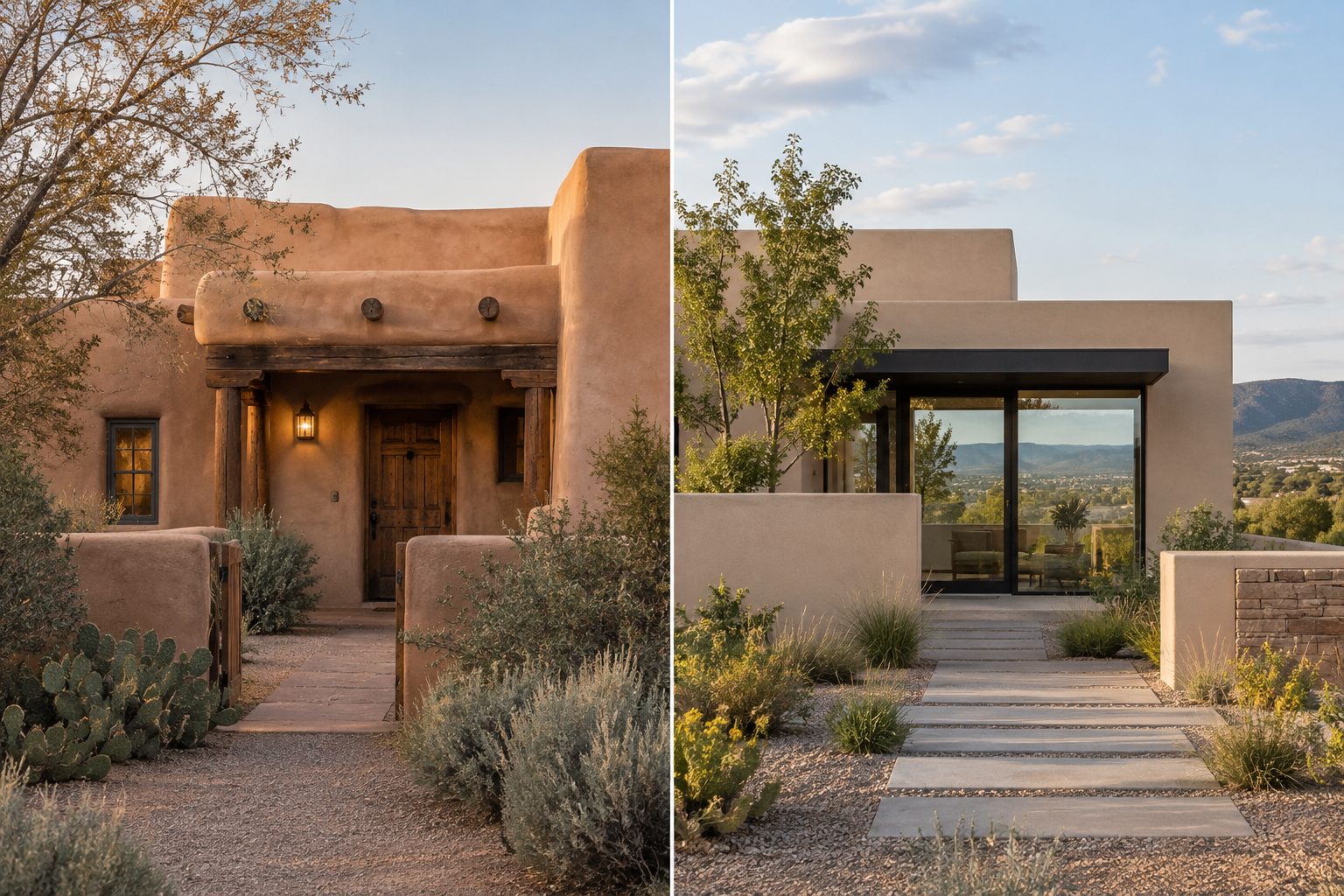
Three bedrooms. Two bathrooms. About 2,000 square feet. Similar asking prices.
On a listing portal, two Santa Fe homes can look remarkably comparable. In person, they may have almost nothing in common.
That is one of the challenges—and one of the interesting parts—of buying real estate in Santa Fe. Our housing stock spans different eras, construction methods, architectural traditions, neighborhoods, elevations, lot conditions, and levels of renovation. Even houses that appear similar in the MLS can represent very different ownership experiences.
For buyers, understanding those differences is often more useful than simply asking whether a home is priced appropriately by the square foot.
Square Footage Only Tells You How Much Space There Is
Price per square foot can be a useful reference point, particularly when comparing relatively similar homes. But in Santa Fe, the word similar is doing a lot of work.
A 2,000-square-foot adobe home near downtown is a very different property from a 2,000-square-foot newer home in a planned community. A contemporary home designed around passive solar principles may function differently from a Pueblo Revival home of the same size. And two houses built in the same decade can differ considerably depending on how they have been maintained, remodeled, expanded, or reconfigured.
Square footage also tells you nothing about how well that space works.
A smaller home with good proportions, thoughtful storage, strong indoor-outdoor connections, and well-placed windows may live considerably better than a larger home with awkward circulation or poorly conceived additions.
That is why we treat price per square foot as one piece of information rather than the answer.
In Santa Fe, Construction Matters
Buy enough houses—or simply look closely at enough of them—and you begin to recognize that Santa Fe has its own vocabulary of construction.
Adobe may be traditional adobe, adobe combined with frame construction, or simply an architectural style applied to conventional construction. Older homes may have evolved through multiple additions. Flat roofs can use different roofing systems and have very different maintenance histories. Heating might come from radiant floors, baseboards, forced air, mini-splits, or some combination of systems installed at different times.
None of these things automatically makes a house better or worse. They do, however, matter.
When we tour a property with a buyer, we want to understand what the house actually is—not just what the listing calls it.
The Lot Can Be as Important as the House
A home’s relationship to its site is particularly important in Santa Fe.
Orientation can affect natural light, passive solar gain, views, privacy, snow and ice, and how outdoor spaces feel throughout the day. A steep driveway may seem inconsequential on a beautiful September afternoon and feel rather different after a winter storm.
Drainage deserves attention as well. Our climate is dry, but when rain arrives during monsoon season, it can arrive quickly. The way water moves around a house—and where it goes next—is worth understanding.
Then there are the qualities that are harder to quantify: whether neighboring homes look directly into the property, whether a portal actually gets used because of wind or afternoon sun, whether the primary rooms capture the view, and whether the house feels connected to its surroundings.
Those characteristics rarely fit neatly into a spreadsheet, but they can have an enormous effect on how much you enjoy living there.
Renovations Require a Closer Look
“Updated” is one of the least precise words in real estate.
It might describe a thoughtful renovation by a respected architect and builder. It might mean new countertops and appliances. It might describe work completed over several decades by multiple owners.
The distinction matters.
When possible, we want to know what changed, when it changed, who performed the work, and whether permits or other documentation are available where applicable. We also look at whether additions and renovations feel integrated with the original house.
This becomes particularly important with older Santa Fe properties, where a home may have been expanded several times during its life. Sometimes those layers give a house extraordinary character. Sometimes they create compromises a buyer should understand before making an offer.
Location Is More Specific Than a Neighborhood Name
Even within the same Santa Fe neighborhood, individual properties can offer noticeably different experiences.
One house may back to open space while another backs to a road. One may have protected-feeling views while another has a vacant parcel nearby that could eventually be developed. Homes a few streets apart can differ in elevation, exposure, traffic, walkability, road conditions, or proximity to trail access.
Covenants and homeowners associations can also matter, particularly if you are considering an addition, exterior changes, solar panels, fencing, a guest house, or other future improvements.
So when we talk about location, we are not only asking, “Do you like this neighborhood?”
We are asking, “What is particular about this exact property within it?”
The Best Comparable Sale Isn’t Always the Closest One
These differences become especially important when deciding what a property may be worth.
Automated valuations tend to favor things that are easy to measure: distance, square footage, bedroom count, bathroom count, lot size, and recent sale price. Those are useful inputs, but Santa Fe homes frequently require more judgment.
The house down the street may be physically close but architecturally and qualitatively very different. A property farther away may actually provide a better comparison because it shares the same construction, condition, views, lot characteristics, architectural quality, or buyer profile.
Good comparative analysis therefore requires more than finding three recent sales and averaging their price per square foot. It requires understanding why a buyer might value one property differently from another.
Look Beyond the Listing
Before a showing, we like to know as much as we reasonably can about the property: its history, prior listings, neighborhood context, comparable sales, obvious changes over time, and questions that deserve closer attention.
Then we bring that context into the house.
The point isn’t to turn every showing into an inspection. It is to help you look past staging and first impressions and begin understanding the property you’re actually considering.
Does the floor plan work for the way you live? What appears original and what has changed? How does the house sit on the land? Are there characteristics that could affect maintenance, resale, or future improvements? And how does this particular home compare with the other options available to you?
A house can be beautiful and still not be the right purchase. It can also be imperfect on paper and become considerably more compelling once you understand it.
That is why, in Santa Fe especially, we think a showing should be about much more than deciding whether you like the house.
It should help you understand what you’re buying.