
 Facebook
 X
 Pinterest
 Copy Link
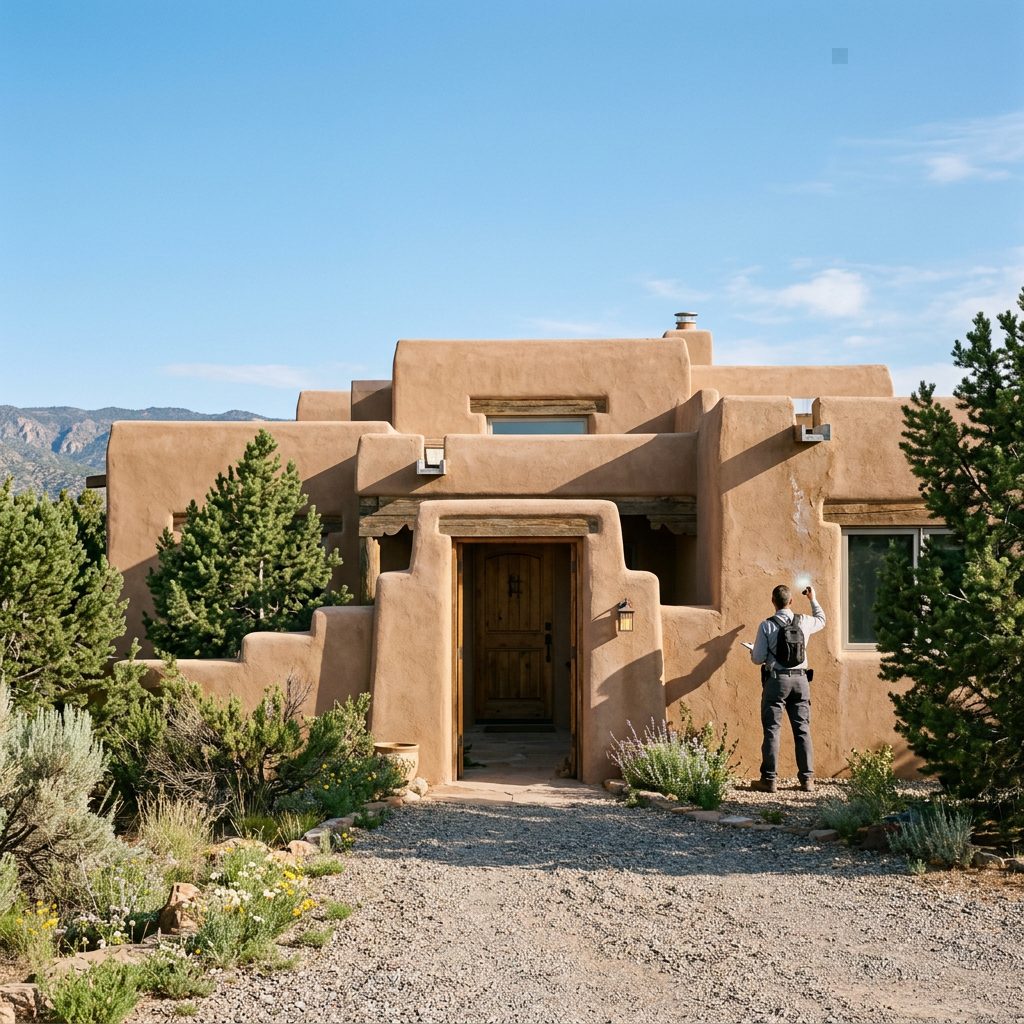
When you’re buying or selling a home in Santa Fe, you’ll get an inspection report that looks like every other inspection report in the country. Standard sections on roofing, foundation, HVAC, plumbing. But if you read that report the way you’d read an inspection for a home in Denver, Los Angeles, or Phoenix, you’ll likely misinterpret what you’re looking at.
Santa Fe homes are different. Not because of who inspects them, but because of where they sit and how they’re built. Our high desert environment—7,000 feet elevation, less than 10 inches of rain annually, intense UV exposure, and temperature swings that can hit 40°F in a single day—creates stresses on buildings that homes in humid climates simply don’t experience. When an inspector flags cracks in your stucco, roof wear, or foundation movement, you need to understand what those findings actually mean in the context of Santa Fe’s climate and construction practices.
This guide walks you through what shows up on Santa Fe home inspections, why it shows up, and what it actually means for your decision as a buyer or seller. It’s the kind of local knowledge that separates a smooth transaction from one filled with costly surprises.
The High Desert Environment and How It Affects Homes
Santa Fe’s climate is extreme in its consistency. Year-round sunshine, minimal moisture, and dramatic daily temperature swings create an environment where buildings expand, contract, and stress in ways that homes in other climates simply don’t. Add in the fact that many Santa Fe homes are built with adobe (earth brick) or sit on expansive soils, and you have a recipe for construction challenges that are completely normal here but would be alarming elsewhere.
The intense UV exposure ages exterior materials faster than almost anywhere else in the country. A 20-year-old asphalt shingle roof in a humid climate might have another decade of life. In Santa Fe, it may already be showing serious wear. The constant thermal cycling—heating and cooling, expanding and contracting—stresses every joint, seal, and fastener on a building. Water management is critical, but our low rainfall means people sometimes underestimate how much damage moisture can still do when it does arrive, especially during monsoon season or from roof leaks.
Understanding these baseline conditions is essential before you read a single line of an inspection report. In Santa Fe, some of what an inspector documents is simply how homes exist in this environment. Other findings represent genuine structural or functional problems. The trick is knowing which is which.
Stucco, Adobe, and What Cracks Really Mean
One thing that appears more often than not in inspection reports here are stucco cracks. Without proper context and guidance in reading through an inspection report, a buyer can see a crack running down a wall and assume the home is falling apart. In reality, cracks in stucco are nearly universal in Santa Fe, and most are completely normal.
Here’s why: stucco is applied over a substrate (usually wood framing or adobe), and both the stucco and the substrate expand and contract at slightly different rates when exposed to temperature swings. Vertical hairline cracks are common in Santa Fe due to thermal expansion and contraction—this is expected wear. However, they should be monitored and sealed as part of routine maintenance to prevent moisture from getting behind the stucco.
Where cracks become concerning is when they’re diagonal (especially stair-step patterns), horizontal and widening, or appear in patterns that suggest uneven movement. These can indicate foundation settling, differential movement, or water infiltration. Vertical cracks alone are more common and often just natural settling, but if they’re very wide or actively growing, that warrants further evaluation.
Adobe homes require different consideration. Adobe is essentially mud brick—it’s durable for centuries if kept dry, but water is its enemy. In an inspection report, you’re looking for signs of moisture damage: softness or crumbling in the adobe itself, spalling (pieces breaking away), or staining that suggests water movement. You’ll also want to know if the home has been sealed with modern paints or membranes. Sometimes well-intentioned owners trap moisture inside the adobe, which actually accelerates deterioration. Traditional lime-based finishes allow the adobe to breathe; modern acrylics and elastomeric coatings don’t.
If an inspection reveals active water damage in adobe, that’s serious and expensive to repair properly. Cosmetic cracks in stucco? That’s Santa Fe.
Roofing, UV Damage, and What “Weathered” Actually Means
Your roof will show wear in Santa Fe faster than it would anywhere else. This isn’t a failure of the roofing material; it’s the reality of intense UV exposure and extreme temperature cycling. An inspector will note roof condition, and here’s what you should know when reading that report.
A roof that’s 15-20 years old in Santa Fe might look worse than a 25-year-old roof in a humid climate. The shingles fade faster, curl faster, and lose their protective granules faster. This doesn’t automatically mean replacement is imminent, but it does mean it’s coming sooner than the manufacturer’s warranty may suggest.
What matters more than cosmetic appearance is function. Is the roof actively leaking? Are there patches of missing shingles? Are the flashing and gutters in good condition? Is water flowing properly away from the home? An inspector will check these things. If the report notes that the roof is “weathered” or “showing age” but isn’t leaking and the flashing is intact, you’re looking at a roof that at minimum likely requires maintenance, and likely needs replacement in the next few years—budget for it accordingly, but don’t treat it as an emergency.
If the report notes active leaks, significant missing shingles, rotting canales, or deteriorated flashing, that’s different. Those are problems that need addressing, either through repair or replacement before closing.
One detail many homeowners miss: Santa Fe’s monsoon season (July through September) brings heavy rains that expose roofing and drainage problems quickly. If you’re buying a home in the fall or winter, poor drainage might not be obvious. Budget conservatively for potential roof work.
Drainage, Water Management, and Foundation Issues
The irony of Santa Fe’s dry climate is that water management is critical. When rain does fall, especially during monsoon season, it can cause serious problems if it’s not flowing away from the home properly.
An inspection report will note how water is directed off the roof (gutters and downspouts), whether it’s flowing away from the foundation, and what the grading looks like around the home. In Santa Fe, proper drainage is the difference between a foundation that lasts a century and one that develops cracks and settling issues.
The good news: if drainage is properly maintained and the roof isn’t leaking, foundation problems in Santa Fe are relatively uncommon. The bad news: if water management fails, repairs are expensive.
HVAC, Windows, and Mechanical Systems Built for the Desert
Santa Fe’s cooling demands are intense. Santa Fe summers are typically warm and sunny, with July afternoon highs averaging around the low 80s. Hotter days do occur, but the city’s elevation, low humidity, and cool overnight temperatures create a very different pattern from lower-elevation desert markets. Homes at 7,000 feet elevation often have oversized cooling systems to handle the daytime heat load. An inspection will evaluate whether the HVAC system is functioning properly, but here’s what matters in Santa Fe specifically: Is the system appropriately sized? Is it running constantly during peak summer, or does it cycle normally?
An undersized AC unit will run continuously in July and August, driving up energy bills and shortening the system’s lifespan. An oversized unit cycles on and off too frequently, which is also inefficient. In Santa Fe’s climate, right-sizing matters.
Windows and doors face similar stresses. Single-pane windows are common in older homes, and they’re beautiful, but they’re inefficient in Santa Fe’s intense sun. The constant thermal cycling causes seals to fail faster here than elsewhere. An inspection will note whether windows and doors are operable, whether seals are intact, and whether there are signs of rot or damage. Expect window replacement or upgrades to be in your budget if you’re buying an older home.
Roof-mounted equipment—AC units, evaporative coolers, solar panels—all experience accelerated wear from UV exposure and thermal stress. An inspector will note their condition, but understand that Santa Fe’s environment is hard on anything exposed to the elements.
What This Means When You’re Buying
Reading an inspection report for a Santa Fe home requires context. That hairline vertical crack in the stucco? Probably normal. That roof that’s visibly weathered? It’s worth budgeting for replacement in the next 5-7 years.
When you receive your inspection report, don’t panic at the first red flag. Instead, ask your real estate broker to help you interpret findings through a Santa Fe lens. Some issues that would be serious in other climates are cosmetic here. Others that might seem minor are worth addressing. Reading a report without context and conversation with your inspector and your broker can lead to unnecessary panic, and result in a failed transaction.
Use inspection findings as a basis for negotiation, not as a reason to walk away. In Santa Fe’s market, homes with minor cosmetic issues sell regularly. What matters is that you understand what you’re buying. If the inspection reveals that the roof needs replacement in the next few years, factor that into your offer. If there’s water damage in the adobe, that’s a negotiation point. If there are cosmetic stucco cracks? That’s Santa Fe.
Also understand that some findings are maintenance issues, not defects. A weathered roof isn’t a defect—it’s a sign that the material is not brand new, and the next owner will need to budget for replacement. A stucco crack that’s stable and not leaking isn’t necessarily a defect—it might just be how the home has settled. These are important distinctions when negotiating.
Finally, if the inspection reveals significant structural issues, water damage, or mechanical failures, don’t hesitate to walk away or significantly adjust your offer. But distinguish between genuine problems and normal wear in Santa Fe’s unique environment.
What This Means When You’re Selling
If you’re selling a Santa Fe home, a pre-listing inspection is one of the smartest investments you can make. Many sellers skip this step, thinking they’ll get better results by avoiding formal documentation. What actually happens is the buyer’s inspector finds issues, the buyer—unfamiliar with how Santa Fe homes work—gets nervous, and you end up negotiating from a position of weakness.
A pre-listing inspection flips that dynamic. You know what’s there, you understand which issues are serious and which are cosmetic, and you’re prepared to explain findings confidently. You’re not caught off guard by stucco cracks or roof weathering. You can address genuine problems proactively.
Here’s the reality: address the real problems. If your roof is actively leaking, if there’s water damage in the adobe, if your foundation slab shows signs of serious settling—these need fixing or crediting at closing. Don’t try to hide them. But don’t over-invest in cosmetic fixes either. Filling hairline stucco cracks is a waste of money; they’ll reappear. A weathered roof that’s not leaking doesn’t need replacement before closing, though you should acknowledge it in your disclosures and be prepared for a buyer to negotiate for a credit.
Be transparent about the home’s age and maintenance history. In Santa Fe, older homes have tremendous value and character. Buyers understand that a 90-year-old home will show its age.
When the inspection happens, make sure your real estate broker is available to provide context if questions arise about known, disclosed issues. Sometimes an inspector will flag something as a concern that’s actually routine in desert homes. Having someone there to explain the reality can prevent unnecessary panic and keep negotiations moving forward.
The FORM Advantage
This is where our experience comes in. At FORM Santa Fe, we’ve confidently guided buyers and sellers through inspections in our local market. We understand the language inspectors use, and we know how to translate it into real-world Santa Fe context.
We know Santa Fe homes. We understand what’s normal wear and tear in a high desert climate versus what’s a genuine problem. When your inspection report comes back, we can translate it for you. We help you negotiate from a position of knowledge, not fear. We guide you through the decision-making process with confidence.
Whether you’re buying or selling, our goal is the same: arm you with the information you need to make decisions that make sense for your situation. That’s not real estate advice pulled from a national playbook. That’s local expertise applied to your Santa Fe home and your specific goals.
You deserve guidance from a team that understands the local market inside and out. FORM Santa Fe is here to walk you through every step with confidence and clarity. Your goals. Our guidance. Real results. Let’s talk about your Santa Fe real estate goals today.