

 Facebook
 X
X
 Pinterest
 Copy Link
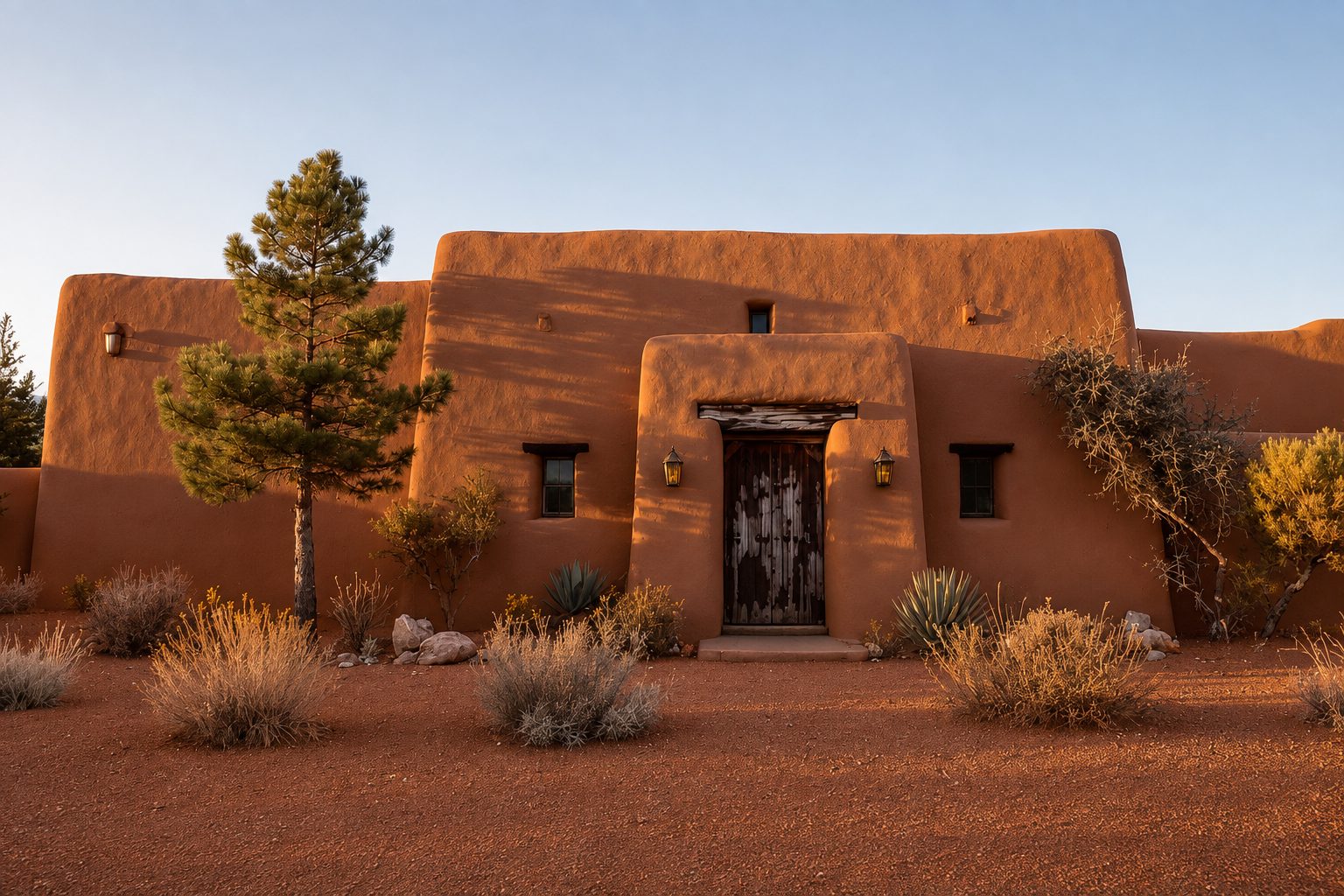
For many people relocating to Santa Fe, the city’s architecture is unlike anything they’ve seen before. Rounded walls, deeply recessed windows, hand-carved wood beams, and earthy colors create a landscape that feels timeless. But these distinctive homes aren’t simply a design style—they’re the product of centuries of history, climate, and craftsmanship.
Whether you’re beginning your search for a historic home or simply curious about Santa Fe’s iconic architecture, understanding adobe construction is one of the best ways to appreciate what makes this city so unique.
What Is an Adobe Home?
An adobe home is traditionally constructed using sun-dried bricks made from a mixture of clay-rich earth, sand, water, and straw. These bricks are stacked with mud mortar and finished with earthen or lime plaster to create thick, durable walls.
While adobe construction dates back thousands of years around the world, it became the defining building material of Northern New Mexico because it perfectly suited the region’s climate and available natural resources.
Today, “adobe home” can refer to two different types of houses:
- True adobe, built with traditional adobe bricks.
- Adobe-style construction, where modern framing is finished to resemble historic adobe architecture.
From the street, the two can look remarkably similar. Understanding the difference is often an important part of the buying process.
A Building Tradition That Predates Santa Fe
Long before Spanish settlers arrived, Pueblo peoples throughout the Southwest had perfected earthen construction. Multi-story pueblos built from adobe and stone demonstrated remarkable durability, with some continuously inhabited communities dating back centuries.
When Spanish colonists established Santa Fe in 1610, they adopted many indigenous building techniques while introducing European influences such as enclosed courtyards, carved wooden doors, and interior room arrangements.
Over time, these traditions blended into a distinctly New Mexican architectural language—one that remains central to Santa Fe’s identity today.
The result wasn’t merely a style of architecture. It became a practical response to climate, materials, and culture that has endured for more than four centuries.
Architectural Features That Define Adobe Homes
Many buyers recognize an adobe home immediately, even if they aren’t familiar with the terminology.
Common features include:
Thick Walls
True adobe walls are often between 18 and 24 inches thick. Besides creating dramatic window openings, these walls provide exceptional thermal mass.
Deeply Recessed Windows
One of adobe architecture’s most recognizable characteristics is the way windows appear set deeply into the wall. The resulting shadows create visual depth while helping reduce solar heat gain.
Rounded Corners
Because adobe is shaped and plastered by hand, corners are often softly rounded rather than perfectly square, giving homes a more organic appearance.
Vigas and Latillas
Large exposed wooden beams (vigas) often project through exterior walls and support ceilings inside. Smaller poles known as latillas are frequently installed between the vigas to create richly textured ceilings.
Kiva Fireplaces
Inspired by ceremonial Pueblo spaces, kiva fireplaces feature rounded forms that blend naturally into adobe interiors and have become one of Santa Fe’s signature design elements.
Earthen Plaster
Traditional adobe homes are finished with plaster rather than exposed brick. Historically this was mud plaster, while modern restorations may incorporate lime or specialized breathable finishes.
Why Adobe Performs So Well in Santa Fe
Adobe isn’t simply beautiful—it was engineered by centuries of experience with Northern New Mexico’s climate.
Because adobe has tremendous thermal mass, the walls slowly absorb heat during the day and gradually release it after temperatures cool. This natural moderation helps interiors remain more comfortable throughout daily temperature swings.
Combined with Santa Fe’s dry climate, abundant sunshine, and cool evenings, adobe creates a living environment that many homeowners find remarkably comfortable year-round.
While modern mechanical systems provide today’s heating and cooling, adobe continues to contribute significantly to interior comfort and energy efficiency.
Is Every Adobe-Looking Home Actually Adobe?
Not necessarily.
Many homes built over the past several decades use conventional wood framing or insulated concrete forms while incorporating adobe-inspired architectural details.
These homes often include:
- Stucco exteriors
- Rounded parapets
- Vigas
- Deep window openings
- Kiva fireplaces
- Pueblo Revival design elements
They capture much of Santa Fe’s visual character while using contemporary construction methods.
For buyers specifically seeking authentic adobe construction, reviewing construction records and working with a knowledgeable local broker can help distinguish true adobe from adobe-style homes.
What Buyers Should Know About Historic Adobe Homes
Owning a historic adobe home can be deeply rewarding, but it also comes with unique considerations.
Many historic homes require specialized maintenance practices that differ from conventional construction. Depending on the property’s age, buyers may encounter:
- Period-appropriate restoration methods
- Historic preservation guidelines
- Specialized plaster maintenance
- Older electrical or plumbing systems that have been thoughtfully updated over time
None of these are necessarily drawbacks—in fact, many owners view them as part of the home’s character—but they do make working with experienced inspectors and local professionals especially valuable.
For buyers relocating from other parts of the country, understanding these differences early helps set realistic expectations and makes the purchasing process much smoother.
Where You’ll Find Historic Adobe Homes
Historic adobe homes can be found throughout Santa Fe, but several neighborhoods are especially well known for preserving the city’s architectural heritage.
The Historic Eastside offers some of Santa Fe’s oldest and most desirable residences, many dating back generations.
The Guadalupe Historic District combines rich history with close proximity to the Railyard and downtown amenities.
Along Canyon Road, historic adobe homes sit alongside galleries, gardens, and winding streets that have become synonymous with Santa Fe’s artistic identity.
You’ll also find exceptional examples throughout downtown and in select historic compounds that have been carefully preserved over the decades.
Why Adobe Continues to Define Santa Fe
Adobe is more than a building material.
It reflects centuries of cultural exchange, responds naturally to the high desert environment, and creates homes with warmth, texture, and character that simply cannot be replicated elsewhere.
For many buyers moving to Santa Fe, purchasing an adobe home isn’t just about owning real estate—it’s about becoming part of a living architectural tradition.
Whether you’re searching for an authentic centuries-old adobe, a meticulously restored Pueblo Revival residence, or a contemporary home inspired by historic design, understanding adobe architecture is an essential first step toward finding the right home.
Explore More Historic Santa Fe
Interested in learning more about Santa Fe’s historic neighborhoods and architecture?
Continue exploring our neighborhood guides, buyer resources, and historic home collections to better understand where adobe homes can be found, what makes each area unique, and what to expect during the buying process. Whether you’re relocating from out of state or simply looking for your next home in Santa Fe, The REALTOR® team at FORM Santa Fe offers local insight designed to help you make informed decisions every step of the way.