

 Facebook
 X
 Pinterest
 Copy Link
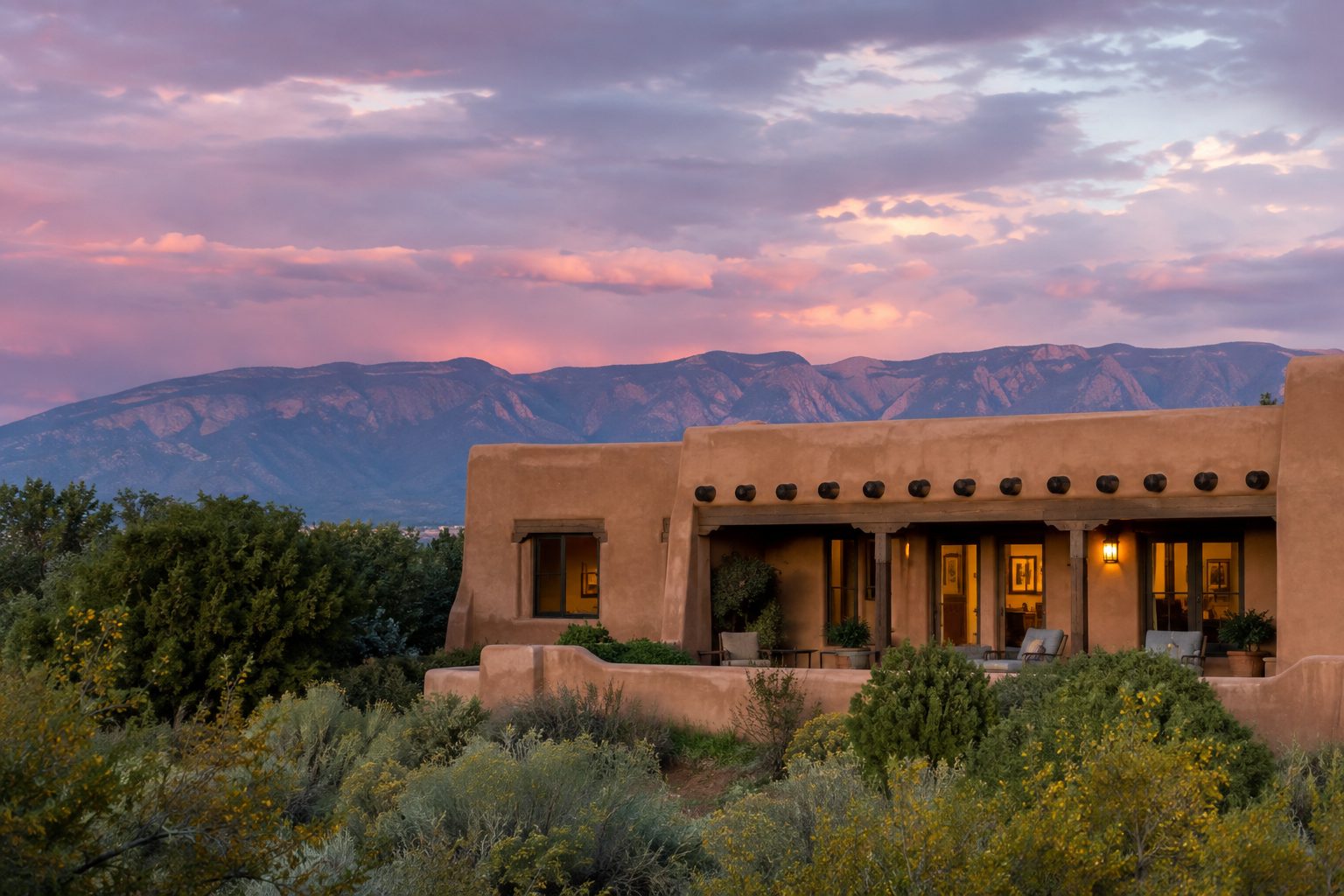
People considering a move to Santa Fe tend to ask practical questions first.
What does it cost to live here? What’s the weather like? Which neighborhoods should I consider? How’s the airport? How far is it to Albuquerque? Where do you ski?
Those questions matter, and they’re relatively easy to answer.
The harder question — and probably the more important one — is what does it actually feel like to live in Santa Fe?
I wondered about that before moving here myself. Visiting a place and living there are two very different things, and Santa Fe can be particularly difficult to understand from a few days spent downtown.
Once you live here, the Plaza becomes somewhere you occasionally walk through on your way to somewhere else. Canyon Road isn’t an attraction; it’s a street with a very funny traffic pattern. Indian Market weekend becomes something you put on your calendar months in advance. You know when there’s fresh snow on the mountain before you’ve checked the ski report.
Santa Fe gradually stops being a destination and starts becoming the setting for your everyday life.
That’s when you really begin to understand the place.
The Sky Commands Your Attention
One of the first things that changed for me after moving to Santa Fe was how often I looked up.
The sky here has a presence that’s difficult to explain until you’ve lived with it. It’s the scale of it, certainly, but also how quickly it changes. Clouds begin building over the Sangre de Cristos on a summer afternoon. A monsoon rolls through and briefly turns the whole landscape dark. An hour later, the western sky is lit up over the Jemez.
And then there’s the light — the thing painters and photographers have been trying to capture here for generations. It changes the color of the mountains, catches the texture of an adobe wall, and can make the same view look completely different from one hour to the next. Sunsets aren’t just spectacular in the West – they also light up clouds in the East for what I call the Second Sunset.
After a while, you understand why Santa Fe homes pay so much attention to their relationship with the outdoors.
Windows frame particular views. Portals create shade while keeping you outside. Courtyards offer protection from the wind and sun. The orientation of a house can determine whether you’re watching the morning light hit the Sangres or the sun set toward the Jemez.
The landscape isn’t something that sits beyond the house. In the best Santa Fe homes, it’s part of the experience of living there.
The Seasons Become Part of Your Calendar
Santa Fe has four real seasons, but they don’t behave quite the way people from other parts of the country necessarily expect.
Summer is warm, but at roughly 7,000 feet, evenings cool down. July and August bring monsoon season, when afternoon clouds can build astonishingly quickly over the mountains. A thunderstorm rolls through, the temperature drops, everything smells like rain and wet earth, and before long the sun may be out again.
Fall is spectacular and far too short. The aspens change in the mountains, mornings become noticeably colder, and suddenly everyone seems to be talking about when Ski Santa Fe will open.
Winter brings occasional snow to town, but also brilliant sunshine. A storm can cover everything in white overnight and roads can be dry again surprisingly quickly.
Then spring arrives in fits and starts. You learn not to put the jacket away too early, as the spring wind can add quite a chill.
More importantly, you begin to organize your year around these changes. Ski season gives way to hiking season. Summer brings the markets and the Opera. Fall means aspens and chile roasting. Winter brings luminarias, snow in the mountains and quieter streets.
Living here makes the calendar feel connected to the place.
Santa Fe Feels Smaller Than Its Cultural Life
Santa Fe has fewer than 100,000 residents. You feel that scale in everyday life.
You run into people you know.
A friend introduces you to someone and you quickly discover three other people you have in common. You see the same faces at restaurants, gallery openings, the farmers market and the grocery store. The longer you’re here, the more interconnected the city becomes.
And yet the cultural life of Santa Fe feels wildly disproportionate to its size, and the steady stream of tourists and transplants keeps the city feeling fresh and new while also familiar.
The Santa Fe Opera draws performers and audiences from around the world. Indian Market brings more than a thousand Indigenous artists to the city. International Folk Art Market, Spanish Market, museums, galleries, chamber music, film, theater and a seemingly endless procession of exhibitions and openings create a cultural calendar more characteristic of a much larger city.
That’s one of Santa Fe’s unusual combinations: it can feel like a small town without asking you to give up the cultural life of a city.
You don’t have to participate in all of it. Most of us don’t.
But it’s there.
You Learn That “Close” Is Relative
Santa Fe is compact enough that much of everyday life happens within a relatively small radius.
From downtown, you can be at a trailhead in minutes. You can leave a restaurant and be home before you would have made it out of the parking garage in some larger cities. Even the Santa Fe Regional Airport is only a short drive from the center of town.
But the more interesting thing is how quickly the character of your surroundings can change.
Drive north toward Tesuque and the city begins to disappear. Head east into the foothills and you’re climbing toward the mountains. Go south toward Eldorado and the landscape opens into broad high-desert views. Drive up Hyde Park Road and piñon and juniper gradually give way to ponderosa, fir and aspen.
That makes choosing where to live here particularly interesting.
Someone can want a historic adobe within walking distance of Canyon Road. Someone else can want ten acres, horses and no visible neighbors. Another person wants a contemporary home overlooking the city lights.
All three can find versions of that life within the greater Santa Fe area.
You Spend More Time Outside Than You Might Expect
Santa Fe architecture makes a lot more sense once you’ve lived here.
Portals aren’t simply decorative architectural features. They’re where people actually spend time.
A good portal can be a dining room in summer, a place for coffee in the morning, shade on a hot afternoon and the best seat in the house during a thunderstorm.
Courtyards work much the same way. They create intimate outdoor spaces protected from sun and wind, particularly in older adobe and Pueblo Revival homes.
And because temperatures can change substantially between afternoon and evening, being outside here doesn’t necessarily mean enduring the hottest part of a summer day.
There’s often another hour coming when the temperature drops, the light changes, and sitting outside becomes exactly where you want to be.
You Begin to Understand Why People Care So Much About Views
“Mountain views” appears in an awful lot of Santa Fe real estate descriptions.
Living here teaches you that the phrase doesn’t say nearly enough.
A view of the Sangre de Cristos is different from a view west toward the Jemez. A house looking toward the mountains in the morning has a different relationship with the landscape from one oriented toward sunset. Elevation can reveal layers of distant ridge lines.
And then there are the views that have nothing to do with mountains.
A courtyard framed by an old adobe wall. Cottonwoods along an arroyo. A stand of piñon and juniper. City lights in the distance. Snow falling through the beam of an exterior light.
You start noticing all of it.
It’s one reason views and orientation matter so much when we look at houses with buyers here. You’re not just deciding what you’ll see during a showing.
You’re deciding what you want to look at every day.
The History Isn’t Confined to Historic Places
Santa Fe’s history isn’t something you encounter only when you visit a museum or read a plaque.
It’s part of the living, breathing, physical fabric of the city.
You see it in adobe walls, acequias, old roads and property lines that don’t necessarily conform to a neat modern grid. You see it in the Plaza and the historic neighborhoods surrounding it.
More importantly, Santa Fe exists within a much older cultural landscape. The Pueblos of northern New Mexico aren’t remnants of a vanished history. They’re living communities with distinct cultures, governments and traditions, and their presence is fundamental to understanding this part of New Mexico.
Spanish and Mexican history are similarly embedded in the region’s architecture, language, food, religious traditions and celebrations.
Living here gives you the opportunity — and, I think, the responsibility — to understand more of that context over time.
There’s always more to learn.
The Big Events Feel Different When You Live Here
Santa Fe’s major events are a significant part of the city’s identity.
Indian Market is enormous. The Opera season transforms summer evenings. Spanish Market, International Folk Art Market, Fiestas, Zozobra and Wine & Chile each bring their own rhythm and crowds.
When you’re visiting, these events can be the reason for the trip.
When you live here, they’re part of the year.
You know which weekends will be busy. You make dinner reservations earlier. You decide whether you’re heading downtown or deliberately staying away from it.
And because you’re not trying to fit Santa Fe into a three-day itinerary, you can experience these things differently.
You can spend an hour at a market and leave.
You can visit a museum because there’s one exhibition you want to see.
You can go to an opening without feeling obligated to spend the rest of the evening on Canyon Road.
There’s no urgency to “do Santa Fe” when you know it’ll still be here next weekend. “The Land of Mañana” is not just a kitschy saying out here — it truly defines the pace of Santa Fe living.
Santa Fe Isn’t for Everyone
No place is, and pretending otherwise isn’t particularly useful to someone considering moving here.
Santa Fe is a small city.
There are things you simply won’t find here that you’d take for granted in a major metropolitan area. Shopping is limited. Some services require a trip to Albuquerque. Air travel can require a connection or a drive to the Sunport. Restaurants close earlier than newcomers sometimes expect.
The high desert itself can require an adjustment. It’s dry. We’re at altitude. Water matters. If your idea of home includes dense green vegetation and a lush lawn, Santa Fe may challenge that picture.
And some people simply want more city. But the inverse is also true.
You can live somewhere with remarkable food, serious art and culture, extraordinary natural beauty and access to the outdoors without spending hours of every day navigating a major metropolitan area.
For a lot of us, that’s a pretty compelling trade.
Eventually, It Becomes Home
There’s a point after moving somewhere when you stop translating everything through the place you came from.
You know which direction you’re facing because you know where the mountains are.
You recognize the smell of rain before the storm reaches you.
You know which roads to avoid at five o’clock and where you want to stop for breakfast.
You see someone you know when you’re out running an errand.
You have favorite trails, favorite restaurants, favorite views and favorite times of year.
None of that happens on a vacation.
It’s the accumulation of ordinary days in a place.
And I think that’s ultimately the difference between visiting Santa Fe and living here.
The things that first make Santa Fe extraordinary — the landscape, architecture, history, food, culture and light — don’t disappear when they become familiar.
They become part of your life.
If you’re thinking about moving to Santa Fe, spend some time looking beyond the question of which house you might buy.
Think about the life you want to have once you get here.
That’s the much more interesting search.